
 Cricket
 Tennis
 Football
 Table Tennis
 Casino
 Volleyball
 Baseball
 Basketball
 Horse Racing
 Politics
 Greyhound Racing
 Binary
 Int Casino
 Sports Book
 Ice Hockey
 Darts
Darts Futsal
 Rugby
Rugby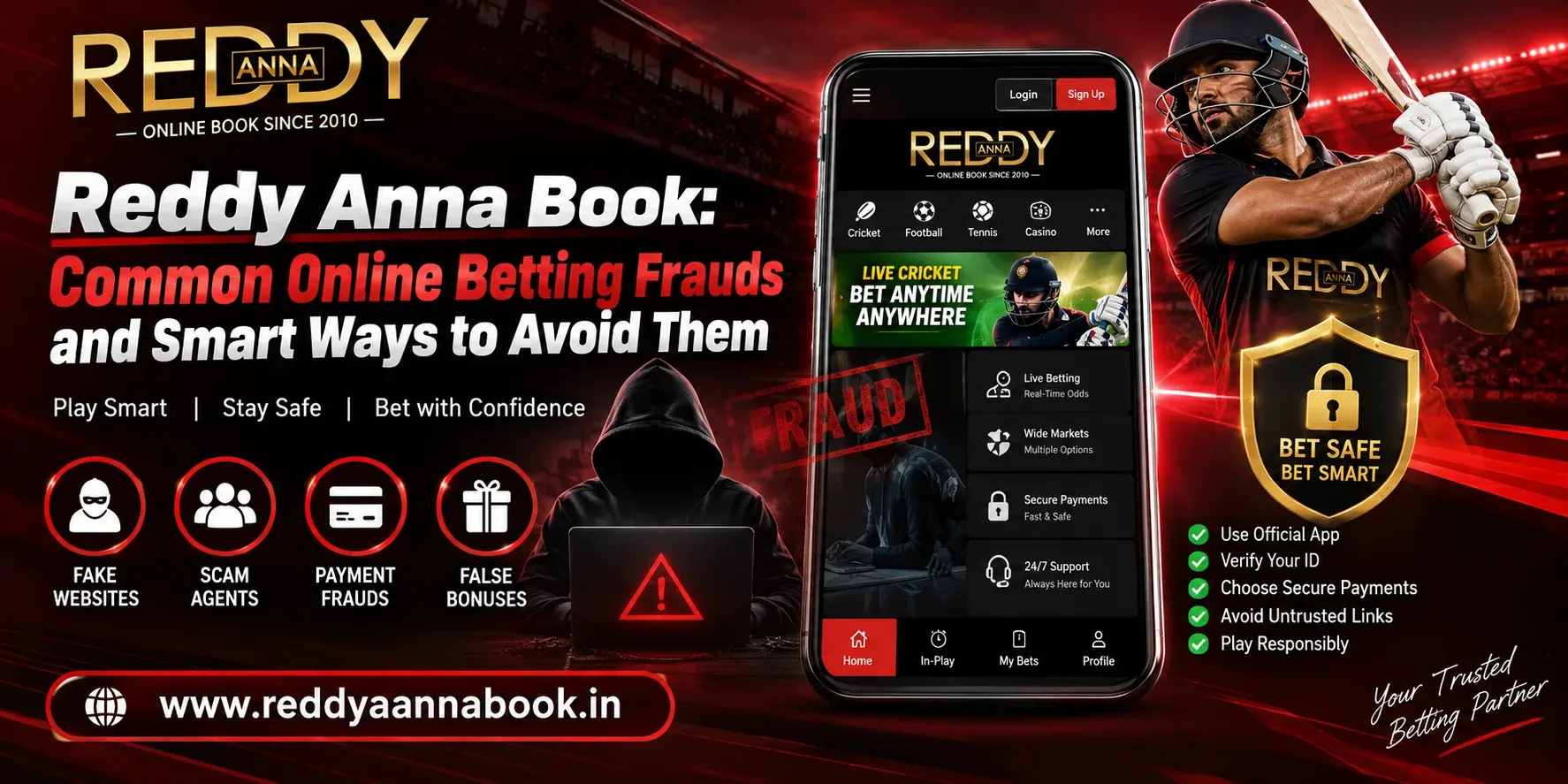
Online betting platforms are now easier to access through websites, phone apps, text messages, and digital payment services. This ease lets people access cricket and other sports quickly. Scammers can also impersonate legitimate sites and trick users.
Fraudsters can use phishing links, copied apps, fake support chats, trick promotions, and false payment demands. The Federal Trade Commission warns that phishing messages can steal passwords, account data, and money details by pretending to be from organisations.
If you use Reddy Anna Book betting services, keep digital safety as important as account care. This guide tells you about betting frauds, the red flags to look for, and real ways to guard your account and money.
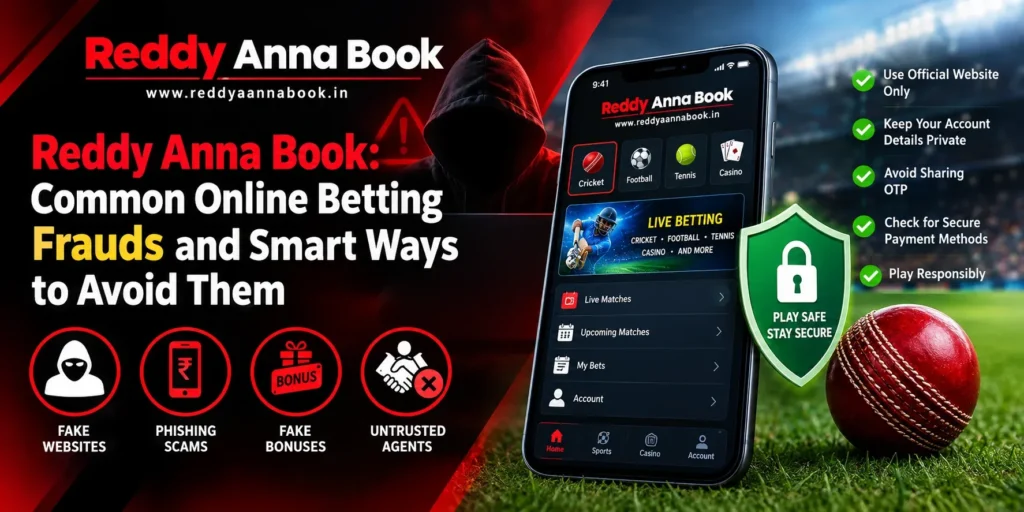
What Are Online Betting Frauds?
Online betting fraud is a scam that tricks people into giving away information, sharing account passwords, making payments that they did not ask for, or installing dangerous software. Online betting fraud can make a user feel rushed so they act without checking whether the request is real.
Online betting fraud can involve a scammer pretending to be a betting site, a payment company, a customer‑support staff member, or a promotions officer. The main aim of betting fraud is to create a sense of urgency so that the user acts before checking whether the request is genuine.
Common objectives include:
- Stealing usernames and passwords
- Obtaining OTPs and verification codes
- Collecting banking or payment information
- Redirecting users to fake login pages
- Installing malicious applications
- Taking over online accounts
- Offering fake bonuses or rewards
- Charging fraudulent withdrawal or verification fees
When looking for Reddy Anna, people must confirm the website or service on their own before putting in details. A well‑known brand name, logo or a professional‑looking page does not automatically prove that a link or account is real.
Fake Betting Websites
Fake websites are among the common ways people trick people online. A scammer can create a page that looks like a real betting site using the same colors, logos, login boxes, and advertising slogans.
The purpose is usually to make users believe they are visiting the real service.
A fake website may request:
- Username
- Password
- Mobile number
- OTP
- Payment information
- Identity documents
- Banking details
Once submitted, this information can be collected by the scammer.
How to Identify a Suspicious Website
Before entering your Reddy Anna Book account information, check the website address carefully.
Look for:
- Incorrect spelling in the domain
- Unusual domain extensions
- Unexpected redirects
- Suspicious pop-ups
- Unfamiliar login pages
- Unsolicited links
- Requests for unusually sensitive information
HTTPS indicates that a connection is encrypted, but it does not independently establish that a website is legitimate. Users should still verify the domain and access source.
Phishing Links and Fake Messages
Phishing is a social-engineering technique in which scammers use messages to persuade people to click links, open attachments, or disclose information.
The message may claim that:
- Your account has been suspended.
- A withdrawal requires verification.
- Your payment has failed.
- Suspicious activity has been detected.
- You have received a special bonus.
- Your account will expire soon.
- You must confirm your identity.
The FTC advises consumers not to click unexpected links or open attachments and recommends contacting the organization through a website or phone number known to be genuine.
Smart Way to Avoid Phishing
If you receive an unexpected message about your account, do not use the link provided in the message.
Instead:
- Close the message.
- Open your browser independently.
- Enter the verified website address yourself.
- Access your account from the trusted source.
- Contact official support if clarification is required.
This simple habit can prevent many credential-theft attempts.
Fake Reddy Anna Login Pages
A fake Reddy Anna Login page can look almost identical to a genuine login screen. The difference may only be visible in the website address or the way the page was reached.
Users should be particularly careful if a login link arrives through:
- Telegram
- SMS
- Social media
- Unsolicited email
- Unknown websites
Do not assume that a message is genuine because it uses a familiar logo or account name. The safest approach is to navigate to the service independently rather than following an unexpected login link.
Fake Customer Support Accounts
Scammers can also impersonate customer-support representatives. This can be particularly convincing when users have publicly posted about problems with withdrawals, logins, deposits, or account access.
A fraudulent support representative may ask for:
- Passwords
- OTPs
- PINs
- Banking credentials
- Card details
- Remote-access permission
- A payment to a personal account
Never provide sensitive authentication credentials simply because someone claims to be a support representative.
If you need assistance with a Reddy Anna ID, verify the support channel through a trusted source before communicating or sharing account information.
Fake Bonuses and Promotions
Promotions are another common method used by scammers. A fraudulent account may advertise an unusually large bonus, free credit, guaranteed return, or exclusive reward.
The scammer may then request an upfront payment before releasing the supposed benefit.
Warning signs include:
- Guaranteed financial returns
- Extremely large rewards
- Limited-time pressure
- Unexplained activation fees
- Requests for payment to personal accounts
- Requests for passwords or OTPs
- Links to unfamiliar websites
Users should verify promotional claims through trusted platform information and read the complete terms before participating.
A promotion should never be considered genuine simply because it uses the name Reddy Anna Club.
Fake Withdrawal and Verification Fees
Some scams specifically target users who believe they have money waiting for withdrawal.
The fraudster may claim that the user must first pay a fee for:
- Account verification
- Withdrawal activation
- Tax processing
- Security clearance
- Account unlocking
- Transaction approval
The user may then be asked to transfer money to an unrelated account. If you receive such a request, do not immediately send money. Verify the situation independently through a trusted platform channel and your financial institution where appropriate. A request for urgent payment should always be treated carefully.
tetur adipiscing elit. Ut elit tellus, luctus nec ullamcorper mattis, pulvinar dapibus leo.
Fake Mobile Applications
Mobile applications can also be used to distribute fraudulent software. A fake app may copy the name and appearance of a legitimate betting application while collecting personal information or installing malicious software.
Users looking for a Reddy Anna APP should verify the application source before downloading anything.
Important precautions include:
- Use trusted application sources.
- Avoid modified APK files from unknown websites.
- Check the developer or publisher information.
- Review application permissions.
- Keep your phone’s operating system updated.
- Avoid installing applications received through unsolicited messages.
The FTC recommends keeping software and applications updated because updates can provide important security protections.
Account Takeover Fraud
Account takeover happens when a scammer obtains enough information to access someone else’s account.
Common causes include:
- Reusing passwords
- Using weak passwords
- Sharing credentials
- Responding to phishing messages
- Sharing OTPs
- Installing malicious software
- Logging in through fake websites
The FTC recommends using strong passwords and multi-factor authentication to provide additional protection.
If you use a Reddy Anna ID, keep your username, password, OTP, and recovery information private.
Why OTPs Should Always Remain Private
One-time passwords are designed to verify a user’s identity during certain account or transaction processes.
Scammers may call or message users and claim that they need an OTP to:
- Confirm an account
- Complete a withdrawal
- Fix a login problem
- Verify a payment
- Cancel a transaction
Do not disclose an OTP simply because someone claims to be helping you. An unexpected OTP request is a reason to stop and verify what is happening through a trusted channel.
Social Media Impersonation
Social media can be useful for communication, but it can also make impersonation easier.
A fraudulent profile may use:
- A similar username
- Copied logos
- Similar profile pictures
- Promotional posts
- Fake support claims
- Direct messages
The profile may then send users to an external website or request payment. The name Reddy Anna Pro, for example, should not automatically establish that an account using that name is officially connected with a particular service. Users should verify the source independently before trusting an account.
QR Code and Payment Scams
Digital payment systems make transactions convenient, but scammers can exploit QR codes and payment links.
A fraudulent QR code may redirect a user to a fake payment page or another malicious destination. The FTC has also warned about scams involving QR codes that can lead users to fraudulent websites designed to steal money or information.
Before making a payment:
- Confirm the recipient.
- Check the payment amount.
- Avoid unknown QR codes.
- Do not approve unexpected payment requests.
- Never share your payment PIN.
- Verify unusual payment instructions independently.
A payment request received through an unsolicited message should receive additional scrutiny.
How to Protect Your Betting Account
Good account security starts with basic digital-hygiene practices.
Use a Strong Password
Create a password that is long, unique, and difficult to guess. Do not reuse the same password across multiple services.
Enable Multi-Factor Authentication
Where available, multi-factor authentication adds another security layer. The FTC explains that it can make account access more difficult for scammers even if they obtain a username and password.
Keep Your Device Updated
Install security updates for your operating system, browser, and applications.
Avoid Public Devices
Do not log into sensitive financial or betting accounts on shared computers whenever possible.
Review Account Activity
Regularly check transactions, login activity, and profile changes for anything unfamiliar.
Common Warning Signs of a Betting Scam
A suspicious offer often has several warning signs rather than just one.
Be cautious when someone:
- Creates unnecessary urgency
- Promises guaranteed winnings
- Requests your password
- Requests an OTP
- Asks for an unexpected payment
- Sends an unfamiliar login link
- Uses a personal payment account
- Offers an unusually large reward
- Claims to be support without verification
- Asks you to install unknown software
When several of these signs appear together, stop communicating until the request has been independently verified.
What to Do If Your Account Is Compromised
If you think your account credentials have been exposed, act quickly.
Change Your Password
Create a new password that has not been used elsewhere.
Secure Other Accounts
If the same password was used on another service, change it there too.
Enable Two-Factor Authentication
Turn on multi-factor authentication wherever the service supports it.
Contact Genuine Support
Use independently verified contact information rather than replying to the suspicious person or message.
Contact Your Bank or Payment Provider
If money has been transferred without authorization or payment information has been exposed, notify your bank or payment provider promptly.
Preserve Evidence
Keep screenshots, transaction records, phone numbers, email addresses, URLs, payment references, and messages related to the incident. These details can be useful when reporting fraud.
The FTC similarly recommends changing compromised passwords and enabling two-factor authentication after credentials have been exposed.
Avoid Recovery Scams
After losing money to a scam, users may become targets for another type of fraud.
A recovery scammer may claim:
- They can recover the lost money.
- They work for a government agency.
- They are connected to a bank.
- They have access to the scammer’s account.
- A small upfront fee is required before recovery.
Be cautious of anyone who promises guaranteed recovery in exchange for an upfront payment. Do not provide additional financial information to an unverified recovery service.
Online Betting Fraud Prevention Checklist
Before logging into an account or making a payment, ask:
- Am I using the correct website?
- Did I navigate to the login page independently?
- Is my password unique?
- Have I enabled multi-factor authentication?
- Am I keeping OTPs private?
- Do I recognize the payment recipient?
- Have I checked the promotion’s terms?
- Is the support account verified?
- Am I downloading software from a trusted source?
- Have I checked the applicable local requirements?
If anything seems unusual, stop and verify before continuing.
Conclusion
Online betting fraud comes in different ways. It can be websites. It can be messages that look like they come from a company. It can be help desk accounts. It can be offers that seem too good to be true. It can be tricks to stop you from getting your money. It can be apps. It can be stealing your account. It can be payment details.
The best way to stay safe is to check things. Do not believe a message just because it has a name you know. Stay away from links that look risky. Keep your passwords safe. Keep your one-time codes safe. Use security when you can. Make sure payment details are real before you send any money.